

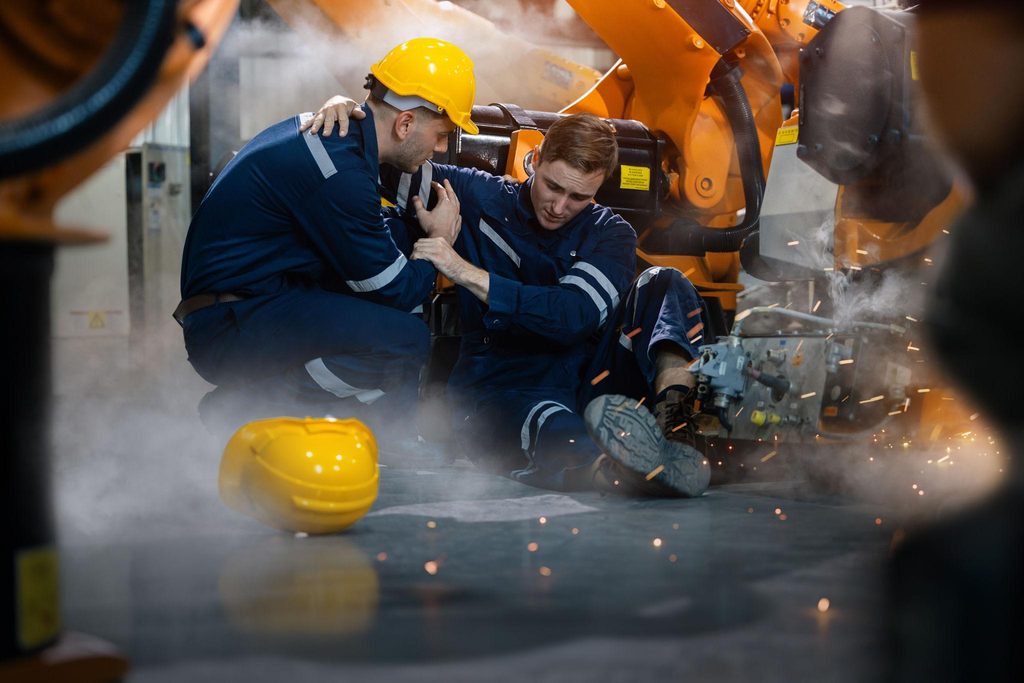
ndustrial accidents can happen in factories, manufacturing plants, warehouses, construction sites, and other industrial workplaces. These accidents can cause serious injuries, long-term health problems, financial difficulties, and unexpected medical expenses for workers and their families.
When an employee suffers an injury because of unsafe working conditions, faulty machinery, employer negligence, or another party’s actions, understanding their legal rights becomes extremely important.
An Industrial Accident Attorney is a legal professional who helps injured workers understand their options, navigate workers’ compensation claims, and explore potential personal injury lawsuits when another party may be responsible.
In this comprehensive guide, we will explain what an industrial accident attorney does, the types of workplace accidents they handle, possible compensation, legal procedures, and how to choose the right workplace injury lawyer.
What Is an Industrial Accident Attorney?
An industrial accident attorney is a lawyer who focuses on workplace accident cases and injuries that occur in industrial environments.
These legal professionals may represent employees who have experienced injuries in factories, manufacturing facilities, construction projects, warehouses, oil and gas facilities, and other workplaces.
Depending on the circumstances and applicable state laws, an industrial accident attorney may help with:
- Workers’ compensation claims.
- Workplace injury lawsuits.
- Third-party liability claims.
- Defective machinery and equipment cases.
- Industrial negligence claims.
- Insurance claim disputes.
- Occupational injury compensation.
- Workplace accident investigations.
An experienced industrial accident lawyer can review the circumstances of an accident, explain available legal options, and help an injured worker understand the compensation process.
Why Do You Need an Industrial Accident Lawyer?
Industrial workplaces often involve heavy equipment, complex machinery, electrical systems, chemicals, and other potential workplace hazards.
When an accident happens, an injured employee may face medical expenses, lost income, rehabilitation costs, and uncertainty about returning to work.
An industrial accident attorney can help explain the legal process and determine whether a workers’ compensation claim or another type of legal claim may be available.
Here are some important reasons people seek legal assistance after an industrial accident:
1. Understanding Your Legal Rights
Workplace injury laws can be complicated. An attorney can explain applicable workers’ compensation rules, reporting requirements, and possible third-party legal claims.
2. Handling Workers’ Compensation Claims
Workers’ compensation may provide benefits such as medical treatment coverage and partial wage replacement, depending on the applicable state law and claim circumstances.
A lawyer can help workers understand the paperwork, documentation, and procedures involved.
3. Investigating Workplace Accidents
An industrial accident lawyer may review accident reports, photographs, equipment records, witness statements, and other available evidence to understand how an accident occurred.
4. Dealing With Insurance Companies
Insurance claims can involve complicated procedures and disagreements about benefits. An attorney may communicate with insurance representatives and help address disputed claims.
5. Exploring Additional Compensation
If someone other than the employer contributed to the accident, a separate third-party personal injury claim may be possible.
For example, a defective industrial machine may create a potential product liability claim against a responsible manufacturer.
Common Types of Industrial Accidents
Industrial accidents can occur in many different ways. Some result from equipment problems, while others involve unsafe working conditions or inadequate safety procedures.
The following table explains common categories of industrial workplace accidents.
| Type of Industrial Accident | Description |
|---|---|
| Machinery Accidents | Injuries involving industrial machines or manufacturing equipment |
| Construction Accidents | Workplace incidents involving construction activities |
| Electrical Accidents | Injuries associated with electrical systems or equipment |
| Chemical Exposure | Illnesses or injuries associated with hazardous substances |
| Falling Objects | Accidents involving materials or objects falling from elevated areas |
| Slip and Fall Accidents | Injuries caused by unsafe walking surfaces |
| Warehouse Accidents | Incidents involving warehouse operations and equipment |
| Fire and Explosion Incidents | Workplace emergencies involving fires or explosions |
The legal options available after an accident depend on the facts, the responsible parties, and the laws governing the workplace.
Types of Injuries in Industrial Workplace Accidents
Industrial accidents can result in different types of physical injuries and occupational illnesses.
Some injuries may require short-term treatment, while others can involve extended medical care and rehabilitation.
Common categories include:
- Bone fractures and orthopedic injuries.
- Back and spinal injuries.
- Head injuries.
- Burns and workplace exposure injuries.
- Hearing-related injuries.
- Repetitive stress injuries.
- Occupational respiratory illnesses.
- Long-term work-related medical conditions.
What Does an Industrial Accident Attorney Do?
An industrial accident attorney can perform several legal tasks depending on the nature of the case.
| Legal Service | How It Helps |
|---|---|
| Case Evaluation | Reviews accident circumstances and potential legal options |
| Evidence Review | Examines reports, records, photographs, and witness information |
| Workers’ Compensation Assistance | Helps navigate applicable workers’ compensation procedures |
| Third-Party Claims | Evaluates claims involving potentially responsible outside parties |
| Insurance Negotiations | Communicates with insurers about disputed claims |
| Legal Representation | Represents clients in applicable legal proceedings |
| Settlement Review | Helps evaluate proposed settlement agreements |
Not every workplace injury requires a lawsuit or an attorney. However, legal guidance may be useful when a claim is disputed, benefits are delayed, or another company may be responsible for the accident.
Workers’ Compensation vs. Personal Injury Lawsuit
One important part of an industrial accident case is understanding the difference between workers’ compensation and a personal injury lawsuit.
These are different legal processes.
What Is Workers’ Compensation?
Workers’ compensation is an insurance-based system that provides certain benefits to eligible employees who experience work-related injuries or illnesses.
Depending on state laws and individual circumstances, benefits may include:
- Medical treatment expenses.
- Partial wage replacement.
- Disability benefits.
- Rehabilitation services.
- Certain other employment-related injury benefits.
Workers’ compensation generally does not require an employee to prove that the employer was negligent.
What Is a Third-Party Personal Injury Lawsuit?
A third-party personal injury lawsuit may be possible when someone other than the employer or a coworker is legally responsible for an industrial accident.
For example, a defective machine manufactured by another company could potentially lead to a product liability claim.
Depending on the claim and applicable law, compensation may include certain financial losses and non-economic damages.
Key Differences
| Comparison | Workers’ Compensation | Third-Party Personal Injury Claim |
|---|---|---|
| Main Purpose | Provides eligible workplace injury benefits | Seeks damages from a legally responsible third party |
| Proof of Fault | Generally not required | Usually requires proving legal responsibility |
| Medical Expenses | May be covered under applicable rules | May be included in recoverable damages |
| Lost Income | May provide partial wage replacement | May include recoverable lost earnings |
| Pain and Suffering | Generally not included | May be recoverable |
| Responsible Party | Workers’ compensation system or insurer | Potentially responsible third party |
In some situations, an injured employee may pursue workers’ compensation benefits and a separate third-party claim. However, reimbursement rights, insurance liens, and other legal rules may affect the outcome.
Who Can Be Held Responsible for an Industrial Accident?
Determining responsibility is an important part of an industrial accident investigation.
Depending on the circumstances, several individuals or organizations may potentially have legal responsibility.
1. Equipment Manufacturers
Manufacturers may face product liability claims when defective machinery, unsafe product designs, or inadequate warnings cause injuries.
2. Maintenance Companies
A maintenance contractor may potentially be responsible if negligent maintenance work contributes to an accident.
3. Construction Contractors
Contractors or subcontractors may face legal claims when their actions create unsafe conditions that cause workplace injuries.
4. Property Owners
Property owners may have potential liability when dangerous property conditions contribute to an accident, depending on applicable premises liability laws.
5. Other Third Parties
A delivery company, outside service provider, or another business may also be involved in certain workplace accident claims.
Responsibility cannot be determined simply because an accident happened. Evidence and applicable legal standards must be considered.
What Compensation May Be Available After an Industrial Accident?
Compensation depends on the type of claim, injury severity, available evidence, and applicable laws.
Workers’ compensation and third-party personal injury claims may provide different categories of benefits or damages.
| Compensation Category | Possible Coverage |
|---|---|
| Medical Expenses | Eligible treatment and healthcare costs |
| Lost Wages | Certain income lost because of the injury |
| Future Medical Care | Qualifying future treatment expenses |
| Disability Benefits | Benefits for qualifying temporary or permanent disabilities |
| Rehabilitation | Eligible physical or vocational rehabilitation |
| Lost Earning Capacity | Potential future income losses in applicable lawsuits |
| Pain and Suffering | Potential non-economic damages in qualifying personal injury claims |
Important: No specific compensation amount is guaranteed. Every case is different, and workers’ compensation benefits are subject to their own rules and limitations.
Read Also: 6 Cheapest home broadband providers in UK
What Should You Do After an Industrial Accident?
Understanding the appropriate steps after an industrial accident can help protect your health and preserve important information.
Step 1: Seek Medical Attention
Your health should be the first priority. Get appropriate medical evaluation and follow professional medical recommendations.
Step 2: Report the Accident
Notify the appropriate workplace supervisor or employer according to the applicable reporting procedures.
Step 3: Document the Incident
Keep copies of available accident reports, medical records, photographs, and relevant communications.
Step 4: Identify Potential Witnesses
If witnesses are available, their accounts may help explain the circumstances of the incident.
Step 5: Understand Your Workers’ Compensation Rights
Review the applicable state workers’ compensation requirements and filing procedures.
Step 6: Consider Legal Guidance
If your claim is denied, benefits are disputed, or a third party may be responsible, consider consulting an attorney licensed in the relevant state.
Read Also : 5 Things You Need to Know Before Investing in Stocks
How to Choose the Best Industrial Accident Attorney
Selecting an appropriate attorney is an important decision when dealing with a complicated workplace injury case.
Before choosing legal representation, consider these factors:
Experience With Industrial Accident Cases
Look for an attorney who handles industrial workplace injuries, workers’ compensation disputes, or relevant third-party personal injury claims.
Knowledge of State Laws
Workers’ compensation laws vary across states. Choose an attorney who is licensed and knowledgeable about the relevant jurisdiction.
Transparent Legal Fees
Ask about attorney fees, additional expenses, consultation charges, and payment arrangements before signing an agreement.
Communication and Availability
An attorney should explain the legal process clearly and provide reasonable updates about the case.
Case Evaluation
Ask whether the attorney can review the accident circumstances and explain potential legal options before you decide how to proceed.
How Much Does an Industrial Accident Attorney Cost?
The cost of hiring an industrial accident attorney depends on the type of case, location, fee arrangement, and applicable state regulations.
Some attorneys offer free initial consultations, while others may charge for their time.
Common fee arrangements include:
| Fee Type | Explanation |
|---|---|
| Free Consultation | Initial discussion without a consultation charge |
| Hourly Fee | Payment based on the attorney’s working hours |
| Contingency Fee | Attorney fees based on a specified percentage of a recovery, if permitted |
| Flat Fee | A fixed charge for an agreed legal service |
Before hiring an attorney, request a written explanation of the fee structure and any additional expenses.
Read Also: How to file a home insurance claim in UK
Important Workplace Safety Responsibilities
Preventing industrial accidents is a shared responsibility involving employers, employees, contractors, and workplace safety professionals.
In the United States, the Occupational Safety and Health Administration (OSHA) establishes and enforces many workplace safety requirements.
Employers have responsibilities that can include providing a workplace free from recognized serious hazards, providing required safety training, maintaining injury records when applicable, and supplying required personal protective equipment.
Employees also have workplace safety rights, including the right to report injuries and certain unsafe working conditions without unlawful retaliation.
Workplace safety programs may include:
- Employee safety training.
- Proper equipment maintenance.
- Workplace hazard assessments.
- Emergency response procedures.
- Appropriate protective equipment.
- Clear safety policies.
- Regular workplace inspections.
Important Link
| Home Page | Click Here |
| Join Whatsapp Group | Click Here |
| Homepage | Click Here |
Frequently Asked Questions (FAQs)
What Is an Industrial Accident Attorney?
An industrial accident attorney is a lawyer who handles legal matters involving workplace injuries, industrial accidents, workers’ compensation claims, and certain third-party personal injury lawsuits.
When Should I Contact an Industrial Accident Lawyer?
You may consider contacting an attorney when your workplace injury claim is denied, insurance benefits are disputed, your injuries are serious, or another company may be responsible for the accident.
Can I Sue My Employer for an Industrial Accident?
In many states, workers’ compensation is generally the primary remedy against an employer for covered workplace injuries. However, exceptions may exist. An attorney can explain the applicable state laws and possible alternatives.
Can I Receive Workers’ Compensation and File a Personal Injury Lawsuit?
In certain situations, yes. An injured employee may qualify for workers’ compensation benefits while pursuing a separate claim against a responsible third party. However, insurance reimbursement rights and other legal restrictions may apply.
What Types of Industrial Accidents Do Attorneys Handle?
Industrial accident attorneys may handle cases involving machinery injuries, factory accidents, construction incidents, chemical exposure, electrical injuries, warehouse accidents, and defective workplace equipment.
How Much Compensation Can I Receive for an Industrial Accident?
There is no fixed compensation amount. The amount depends on the injury, medical expenses, lost income, applicable laws, insurance coverage, and whether a valid third-party claim exists.
Can I File a Claim If My Workplace Accident Was Not My Employer’s Fault?
Potentially, yes. Workers’ compensation may still be available even when employer negligence is not involved. A separate personal injury claim may also be possible if another legally responsible party caused the accident.
What Evidence Is Important in an Industrial Accident Case?
Relevant evidence may include medical records, workplace accident reports, photographs, witness statements, equipment inspection records, and employment documentation.
What If My Workers’ Compensation Claim Is Denied?
You may have the right to challenge the decision through the applicable state workers’ compensation process. Filing deadlines and appeal procedures vary by state.
How Long Do Industrial Accident Cases Take?
The timeline depends on the complexity of the accident, medical treatment, insurance disputes, legal proceedings, and applicable deadlines. Some claims resolve relatively quickly, while others take considerably longer.
Does OSHA Provide Compensation for Workplace Injuries?
OSHA primarily focuses on workplace safety and enforcement. Workers’ compensation benefits are generally handled through state systems for private-sector and state or local government employees, subject to applicable exceptions.
Can I Choose My Own Industrial Accident Attorney?
Generally, you can research and consult attorneys who are licensed in the relevant jurisdiction. However, workers’ compensation rules may have specific requirements regarding attorney representation and fees.
Conclusion
Industrial accidents can create serious physical, financial, and professional challenges for workers and their families. Understanding workplace injury rights and available legal options is an important step toward addressing these challenges.
An experienced industrial accident attorney can help evaluate a workplace injury case, explain workers’ compensation procedures, investigate potential third-party liability, and provide legal representation when appropriate.
Whether an accident involves defective machinery, unsafe workplace conditions, or another company’s negligence, understanding the applicable laws can help injured workers make informed decisions.
If you or someone you know has experienced an industrial workplace accident, consider seeking qualified legal guidance to understand the available options and applicable deadlines.
Legal Disclaimer: This article is intended for general educational and informational purposes only. It does not constitute legal advice or create an attorney-client relationship. Laws, compensation eligibility, and filing deadlines vary by state and individual circumstances. Consult a qualified attorney for advice about a specific case.